
Why There Is No Single Answer
You will find confident claims online that a hot tub "adds X percent" to bookings. We do not repeat them, because the answer depends on your home, your market and your season. A hot tub at a ski home in January and the same hot tub at a lake cottage in August are different investments. A sauna in a house that already sleeps twelve may matter less than a second bathroom would.
What you can do is estimate it for your own home, using numbers you collect yourself. Treat the result as a range, not a promise.
Step 1: Check What Guests in Your Market Filter For
Airbnb says many guests filter search results by amenities, and that listing everything you offer may help you increase bookings. Its amenity categories include basics, bathroom, bedroom and laundry, entertainment, family, heating and cooling, home safety, internet and office, kitchen and dining, location features, outdoor, and parking and facilities.
That makes a simple test possible:
- Search your town on Airbnb and Vrbo for your dates, guest count and bedroom count.
- Note how many comparable listings appear.
- Add the amenity filter (hot tub, EV charger, pets allowed, and so on) and note how many remain.
- Look at the nightly rates of the listings with and without it, for the same size home, on the same dates.
If very few comparable homes offer the amenity and the ones that do charge more, that is a signal. If every competitor already has one, the amenity may be what you need just to keep up rather than a premium.
Before you spend on anything, make sure the basics are covered. Airbnb lists toilet paper, soap, one towel per guest, one pillow per guest and linens for each bed as essential amenities it strongly encourages hosts to provide.
Step 2: Estimate the Income Side
An amenity can raise income in two ways: a higher nightly rate (ADR), or more booked nights (occupancy). Estimate each separately, by season.
- Rate uplift: the difference in nightly rate between comparable listings with and without the amenity, in your market, in each season. Use a conservative figure.
- Extra nights: additional nights you expect to book because the amenity puts you into filtered searches or wins a booking. Be honest; this is the number owners overestimate most.
- Season length: how many nights a year the amenity actually matters. A pool matters for a short New England summer. A hot tub may matter more in ski season and foliage weekends.
Extra annual income = (rate uplift x nights booked in the relevant seasons) + (extra nights x your average nightly rate)
Then subtract what the platform keeps from those extra bookings, and any per-stay cost of the amenity (see step 3). If ADR and occupancy are new terms, our guide to occupancy, ADR and RevPAR explains them.
Step 3: Count Every Cost, Not Just the Purchase
Most amenity math goes wrong on costs. Use a full list:
| Cost type | Examples to price |
|---|---|
| Purchase and installation | Equipment, electrical work, permits, delivery, a concrete pad or deck reinforcement |
| Running costs | Electricity, propane, chemicals, internet subscriptions |
| Per-stay labor | Hot tub testing and cleaning, sauna wipe-down, kayak counting and storage |
| Maintenance and repair | Covers, pumps, heaters, batteries, replacement parts |
| Insurance | Ask your insurer whether the amenity changes your premium or is excluded |
| Seasonal | Winterizing, freeze protection, spring start-up, storage |
| Lifespan | How many years before it needs replacing |
Annual cost = (purchase and installation / years of life) + running costs + (per-stay labor x stays per year) + maintenance + any added insurance + seasonal costs
Step 4: Put It Together
Use the worksheet below. Fill it in for each amenity you are considering, using your own figures.
| Line | Your figure |
|---|---|
| A. Extra annual income from step 2, after platform fees | [ ] |
| B. Annual cost from step 3 | [ ] |
| C. Net annual gain (A minus B) | [ ] |
| D. Upfront cost (purchase and installation) | [ ] |
| E. Payback in years (D divided by C, if C is positive) | [ ] |
| F. Expected life in years | [ ] |
Read the result plainly:
- C is negative: the amenity costs more each year than it brings in. It may still be worth it for your own family's use, but it is not a rental investment.
- E is longer than F: it will wear out before it pays back.
- E is comfortably shorter than F: it is a candidate, if your step 1 evidence was solid.
For the bigger picture of return on the whole home, use our vacation rental ROI guide.
New England Amenities, What to Check for Each
- Hot tubs. Strong winter appeal, but they need water testing and cleaning between stays, a locking cover, freeze protection and an insurer's sign-off. See our page on hot tub rentals.
- Saunas. Popular at ski and lake homes; check electrical capacity, ventilation and heater guards.
- Wood stoves and fireplaces. Guests love them; they also add chimney sweeping, firewood, ash disposal and fire risk.
- EV chargers. Check your panel capacity and whether nearby competitors offer one using the Airbnb filter.
- Kayaks, canoes and paddleboards. Low cost, but count life jackets, storage, damage and liability questions for your insurer.
- Game rooms and bunk rooms. Can lift capacity and appeal to families, but more guests means more septic load, parking and a fire-egress check for every sleeping space.
- Workspace and fast Wi-Fi. Matters for longer stays and midweek bookings.
- Pet-friendly setup. Not an amenity you buy, but a policy with cleaning and wear costs; service animals cannot be charged a pet fee on Airbnb.
For ideas on which features New England guests notice, see amenities that boost Airbnb bookings in New England and winter amenities for ski area rentals.
A Few Rules of Thumb
- Fix weaknesses before adding extras. Bad beds, weak Wi-Fi or a hard winter driveway lose more bookings than a missing hot tub wins.
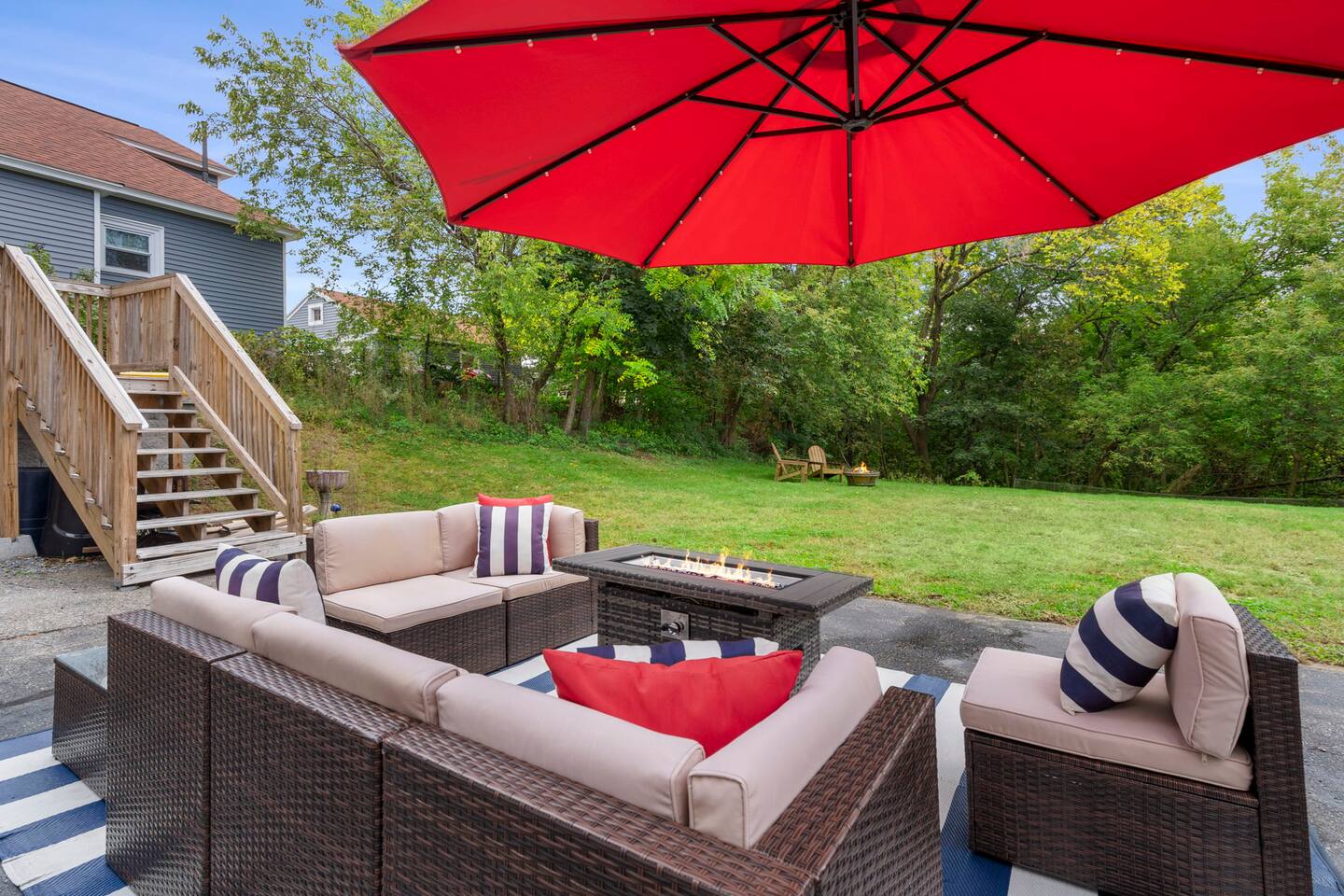
- Test before you build. Some amenities (kayaks, an EV charger, a fire pit kit) can be trialed for a season. A pool or a sauna cannot.
- Check the rules first. Town permits, HOA rules, shoreland rules near lakes and septic capacity can rule an amenity out.
- Photograph and list it properly. An amenity guests cannot see in photos or find in the filter does little for bookings.
New England Host Co reviews pricing daily in PriceLabs from competitor pricing and market demand, which is where an amenity's effect on rates shows up. Start at the Renting Out Your Home on Airbnb in New England hub.
FAQ
Does a Hot Tub Always Pay for Itself?
No. It depends on your market, season and costs. Use the worksheet with your own numbers, and include per-stay cleaning, chemicals, power and insurance.
Where Do I Find Data on What Amenities Competitors Offer?
Search your town on Airbnb and Vrbo with your dates and guest count, then add amenity filters and compare listings and rates.
Should I List Every Amenity I Have?
Yes, if it is really there and working. Airbnb says many guests filter by amenities, so listing everything you offer may help bookings.
What Should I Fix Before Buying an Amenity?
The basics: comfortable beds, enough towels and linens, reliable heat, Wi-Fi and safe winter access.