Part of the Short-Term Rental Management Guide, step 1: learn
What Vermont Counts as a Short-Term Rental
The Vermont Department of Taxes uses the statutory definition: a furnished house, condominium, or other dwelling room or self-contained dwelling unit rented to the transient, traveling or vacationing public for fewer than 30 consecutive days and for more than 14 days per calendar year. It covers whole homes and single rooms.
Two thresholds fall out of that:
- 14 days. The rooms tax applies when rentals total more than 14 days in a calendar year.
- 30 days. The Department says that if you rent to the same person for 30 or more consecutive days, that person is considered a permanent resident and different rules apply.
The Three Taxes, as of October 2026
| Tax | Rate | Applies to |
|---|---|---|
| Vermont Rooms Tax | 9% | All taxable lodging, hotels and short-term rentals alike |
| Short-term rental surcharge | 3% | Short-term rentals; not rentals in lodging establishments licensed by the Department of Health |
| Local option rooms tax | 1% | Only in towns that have voted it in |
So a short-term rental in a town with a local option rooms tax charges 13% in total; elsewhere it is 12%.
The 3% Surcharge
Act 183 of 2024 created the surcharge. It applies to rents collected on or after August 1, 2024, on top of the 9% rooms tax and any 1% local tax. Whether it applies turns on licensing: the surcharge does not apply to a rental in a hotel or other lodging establishment licensed under 18 V.S.A. Chapter 85, and if the property does not need a lodging license, the surcharge applies.
The Department of Taxes explains the licensing line this way: lodging establishments must be licensed if they operate three or more guest rooms or units or prepare food on site. A short-term rental like those on platform sites does not need a lodging license if two or fewer units are offered and no food is prepared for guests. Questions about licensing go to the Vermont Department of Health.
The 1% Local Option Tax
Towns choose whether to add 1% to meals, rooms, alcohol and sales taxes. The Department of Taxes keeps the list of towns and their effective dates on its Local Option Tax page, along with an address lookup tool. Ludlow, home of Okemo, adopted a local option tax that took effect in July 2025; see our Ludlow page.
Who Collects: Platforms and You
The Department of Taxes is direct about platforms: if you list on an internet rental platform, that platform is responsible under Vermont law to register with the Department and collect and remit the rooms tax, any local option tax and the short-term rental surcharge.
What that means for you:
- Platform only. If you rent only through a platform and receive no other rents, you do not need your own rooms tax account.
- Platform plus direct bookings. If you also rent independently, you must register with the Department and collect and remit tax on the stays booked off the platform. Registration is free.
- Filing. Meals and rooms tax, local option tax and the surcharge all go on Form MRT-441, filed and paid electronically through myVTax. In the return, rent from short-term rentals goes on its own line and the surcharge calculates automatically.
- Income tax still applies. The Department notes that hosts, even those who rent only through platforms, must report rental income on their Vermont personal income tax return.
Airbnb's help center lists what it collects on Vermont bookings of 29 nights or shorter: the 9% rooms tax, the 1% local option tax where it applies, and the 3% surcharge, all calculated on the listing price including cleaning and guest fees. For other platforms, check their help pages and keep their tax statements.
Health and Fire Safety Rules
What the Statute Requires
Vermont's short-term rental statute is short. Under 18 V.S.A. sections 4466 to 4468, added in 2018:
- Inspection. The Commissioner of Health may inspect a short-term rental and the operator's records at reasonable times, and direct changes if the rental is not run in line with the chapter.
- Posting. You must post inside the unit a telephone number for the person responsible for the unit, and contact information for the Department of Health and the Department of Public Safety's Division of Fire Safety.
- Information packet and self-certification. The Department of Health, with the Division of Fire Safety, prepares a packet on the health, safety and financial obligations of operators, including a reminder to review property and liability insurance with your insurer. It comes with a self-certification form you keep; you do not file it.
What the Division of Fire Safety Expects
The Division of Fire Safety says short-term rentals are under its jurisdiction and that compliance is the owner's responsibility. As of October 2026 its guidance, tied to the 2025 Vermont Fire and Building Safety Code, includes:
- Occupant load. A single dwelling unit that is rented has an occupant load of 8 people or less unless a Division report says otherwise. Sleeping 9 or more means a change of use inspection request to the regional office and meeting lodging-level code.
- The checklist. If you rent to 8 or fewer, use the Division's Short-Term Rental Checklist and leave a copy in an obvious, visible place in the rental. Towns may ask to see it.
- Smoke alarms. Photoelectric (or UL 217 8th edition or newer), near sleeping rooms, inside each sleeping room and on every level including the basement. Newly installed alarms must be hard-wired; in buildings built before 1994, sleeping room alarms may be 10-year sealed lithium units.
- Carbon monoxide alarms. Outside each sleeping area, in any sleeping room with a fuel-burning appliance or fireplace, and on every occupied level, wired with battery backup.
- Escape. Every sleeping room needs a primary and secondary means of escape; a window meeting rescue requirements can serve, unless the building is sprinklered.
- Heat and fireplaces. Oil, gas, wood, pellet and kerosene heating systems must be maintained and inspected at least once every two years. If guests may use a wood stove or fireplace, leave clear instructions and a metal ash bin with a lid.
- Construction permits. Renovations, alterations or new fixed equipment need permit applications filed with the Division before work starts, separate from any town zoning permit.
For a ski house sleeping a crowd, that 8-person line is the one to plan around. Our insurance and safety page covers alarms and egress across all three states.
What Towns Can Add
Under 24 V.S.A. section 2291(29), Vermont municipalities may regulate the operation of short-term rentals by ordinance or bylaw, provided the ordinance does not adversely impact the availability of long-term rental housing. Rules therefore vary town by town; Ludlow, for one, has debated a registry for years without adopting one. Zoning bylaws can also matter, especially for additions, ADUs and septic capacity. Ask the town's zoning administrator before you list.
A Vermont Pre-Listing Checklist
- Ask the town zoning administrator about any short-term rental ordinance, registry or permit, and about zoning for your use.
- Check condo or association rules; see HOA and condo rules.
- Decide whether you will take any direct bookings; if so, register for a meals and rooms account with the Department of Taxes.
- Walk the Division of Fire Safety checklist, fix gaps, and leave the completed copy in the house.
- Post the responsible person's phone number and the Health and Fire Safety contacts.
- Call your insurer about short-term rental coverage.
- Keep platform tax statements for your income tax return.
The full three-state list is on our permits and licenses page.
Where New England Host Co Fits
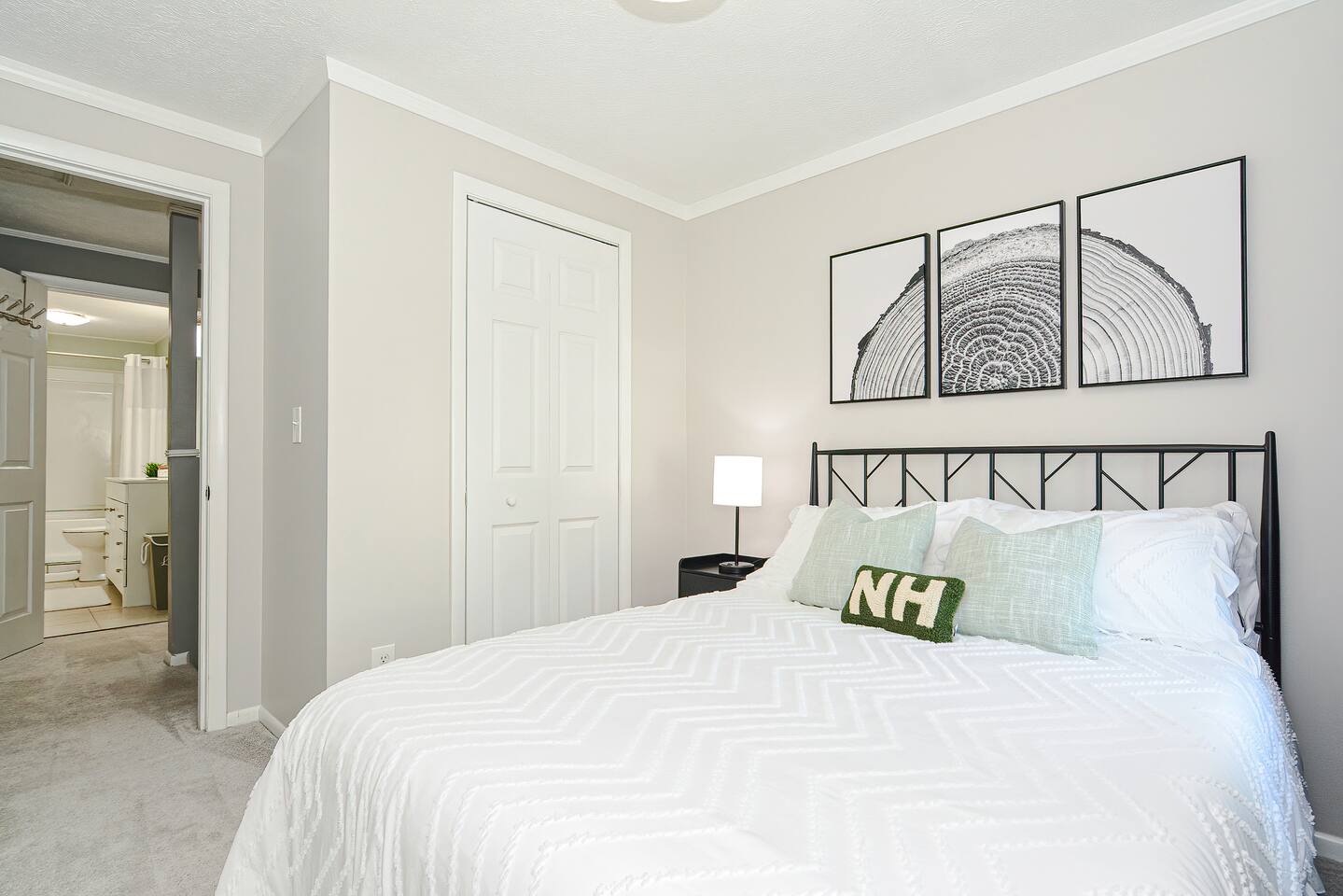
New England Host Co serves Southern Vermont around Ludlow and Okemo Mountain, and manages a modern 3-bedroom, 2-bath home three minutes from Okemo. Housekeeping and an inspection happen after every stay, and license and permit fees stay with the owner. To ask about your own home, use the contact page, or read on in the owner hub.
FAQ
What Is the Total Tax on a Vermont Airbnb?
As of October 2026, 12% (9% rooms tax plus the 3% short-term rental surcharge), or 13% in a town with a 1% local option rooms tax.
Do I need my own Vermont rooms tax account if I only use Airbnb?
No. The Department of Taxes says if you rent only on a platform and receive no other rents, you do not need to register for a rooms tax account. If you take direct bookings, you do.
When Did the 3% Surcharge Start?
It applies to rents collected on or after August 1, 2024, under Act 183 of 2024.
How Many Guests Can My Vermont Rental Sleep?
The Division of Fire Safety treats a rented single dwelling unit as 8 people or less unless a Division report says otherwise. Sleeping more requires a change of use inspection and lodging-level code compliance.
What Do I Have to Post Inside the Rental?
A phone number for the person responsible for the unit, plus contact information for the Department of Health and the Division of Fire Safety. The Division also asks that you leave the completed Short-Term Rental Checklist in a visible place.
This page is general information as of October 2026, not legal or tax advice; check with the Department of Taxes, your town or a professional before you list.
Sources
- Short-Term Rentals, Vermont Department of Taxes
- Local Option Tax, Vermont Department of Taxes
- Short-Term Rental / Transient Lodging, Vermont Division of Fire Safety
- 18 V.S.A. Chapter 85, Subchapter 7: Short-Term Rentals (Vermont Legislature)
- 18 V.S.A. section 4467, Posting contact information
- 24 V.S.A. section 2291, Enumeration of powers
- Occupancy tax collection and remittance by Airbnb in Vermont (Airbnb Help Center)